Tourism License: 1793/072
-
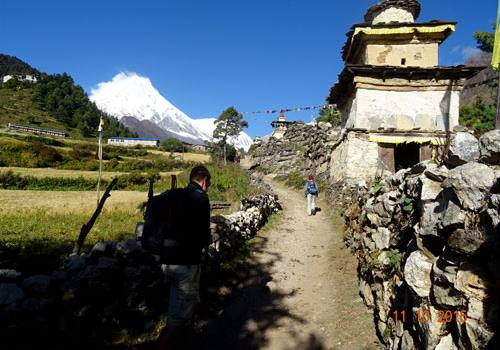
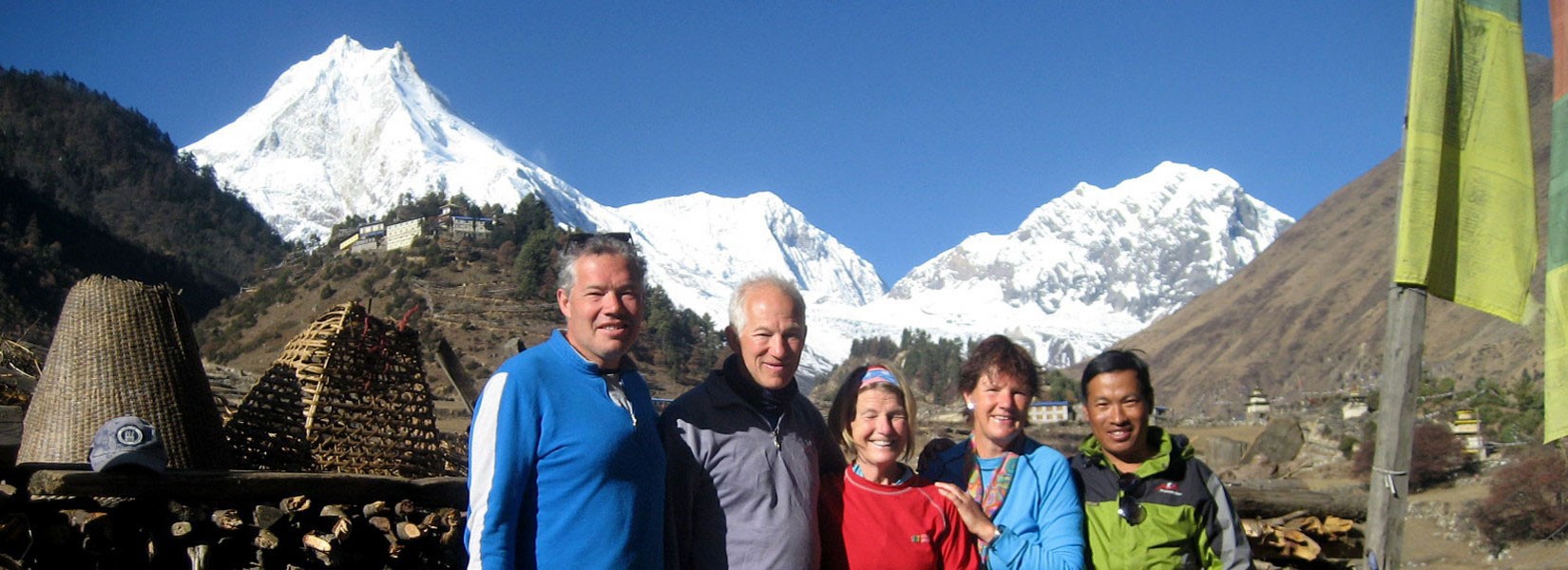 Manaslu Trekking Guide Pradip Tamang with his Clients in 2013 November
Manaslu Trek
Manaslu Region Trek in Nepal: Experience the authentic cultural and natural heritage!
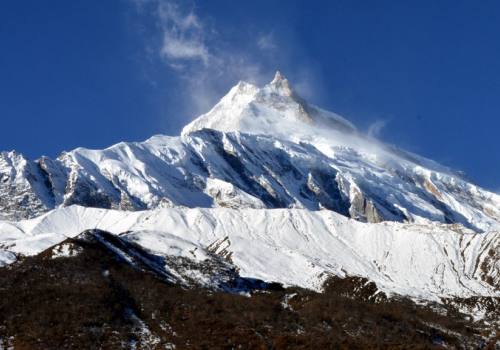
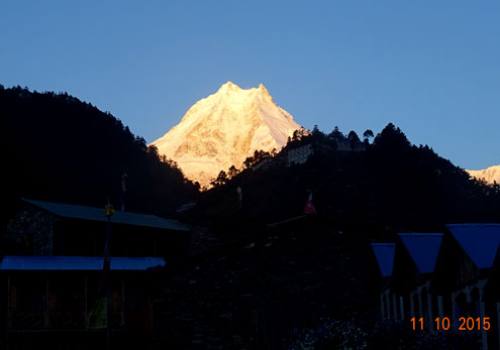
The Manaslu Region was sealed and just opened in the early 90s to foreign visitors, and it has been a controlled area to protect its fragile natural resources and cultural heritage and to promote ecotourism to improve the livelihood of the local people in the Manaslu Conservation Area. The Manaslu region is isolated and has long been undamaged by modernity. Trekking tours in this isolated area have been extremely popular for the last few years. Those trekking enthusiasts searching for ‘wilderness and authentic culture’ experiences have started to bypass the ‘Annapurna’ and hike the Manaslu route instead. The ACAP (Manaslu Conservation Area Project) is a protected area in Nepal, established in 1998, covering 1663 km² (642 sq mi) in the Mansiri Himalayan range of the Himalayas in the Gorkha District. It is a classic setting to experience spotless Himalayan nature and culture. The conservation area starts at 600m and is covered by the eighth-highest peak in the world, Mount Manaslu, at 8,613 m.
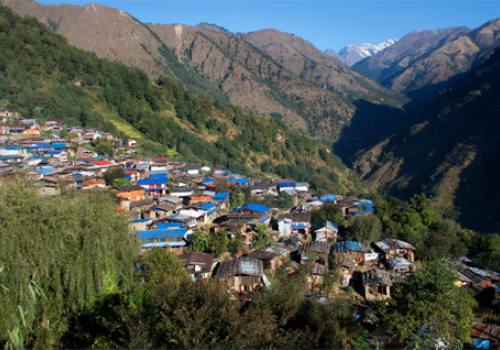
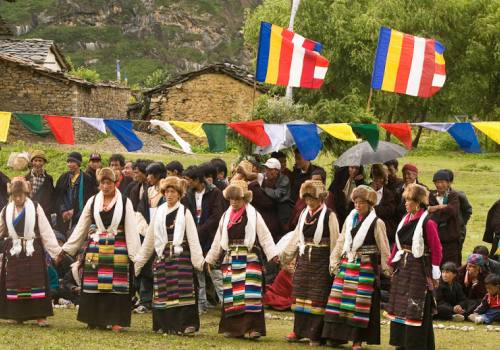
The region offers a variety of trekking options. The popular Manaslu Trekking Route of 177 kilometers (110 mi) skirts the Manaslu massif over the Larke Pass (down to Annapurna). The trekking trail follows an ancient salt-trading route along the Budhi Gandaki River. En route, 10 peaks over 6,500 meters (21,300 ft) are visible, including a few over 7,000 meters (23,000 ft). The highest point reached along the trek route is the Larke Pass at an elevation of 5100 meters (17,175 ft). As of May 2008, the mountain has been climbed 297 times with 53 fatalities. The main highlights of the region are striking landscapes, the incredible view of the Himalayan panorama, mighty mountains like Mt. Manaslu, the Ganesh Himal Range, Sringi Himala, Naike Peak, Larky Peak, Cheo Himal, Ratna Chuli, and Kangaroo Himal; oceans of rhododendron, blue pine, and bamboo forests crowded with a variety of wildlife; beautiful cascading waterfalls; Sama Gaun in the lap of Mount Manaslu; ancient Buddhist monasteries; countless Mani Walls (stone tablets engraved with mantras); and chorten, or stupas, and Kanis along the path (round religious structures in Tibetan Buddhism often housing relics and surrounded by prayer mills), which attract you with hiking and exploring enthusiasm. These religious places should always be walked to the left or clockwise to show respect for the sacredness of these ancient structures and the people who tend them. Similarly, if you feel moved to spin prayer wheels or enter a temple, also move the wheels or your body in a clockwise direction. Before entering a temple, take off your shoes and leave them at the door side as a mark of respect.
The trek through Larke Pass is a dramatically amazing and matchless mountain view of Cheo Himal, Ratna Chuli, Kangaroo Himal, the Annapurna Range, and many other snowcapped mountains seen from the top in every direction, and trekking down through the adventurous high mountain path is a lifetime experience venture that you will never forget. After descending down from the top we will arrive at the amazing valley of Bimthang and the harmonious and beautiful Gurung Village. Bimthang, meaning ‘plain of sand,’ used to be the main salt trade center in the former time between Nepalese and Tibetan people which has the best tea houses on the route. The Manaslu Trekking Trail joins with the Annapurna Circuit Trail part one down at Dharapani. We can combine Manaslu Circuit Trekking with Tsum Valley, a beautiful and newly opened virgin trekking trail that offers something totally different to trekking enthusiasts. The best seasons to trek to the Manaslu Region and Tsum Valley are spring (March, April, and May) and autumn (September, October, and November), yet you can even trek in December, January, and February. We, Guide in Himalaya (Wilderness Excursion), recommend some worthwhile side trips and Day excursion itineraries that you should not miss out on during your trip to Manaslu. We are one of the best government-registered trekking agencies that provides the best Manaslu Trek Local Guides to make your holiday more beautifully memorable.
Regulation to follow in Manaslu Trekking, getting permits, and guide
To trek to Manaslu requires 3 kinds of permits; Manaslu trek permits cost USD 100.00 for the first 7 days, then USD 15.00 each additional day from September to November, and USD 75.00 for the first 7 days, then USD 10.00 each extra day from December to August. In addition, MCAP and ACAP permits are required that cost NPR 3000.00, equivalent to USD 25 in foreign currency, each per person. You must trek with a licensed guide and organize with a government-registered trekking agency as per state law. As the Manaslu trek grew popular, it became a bit more crowded compared to a few years back. You may like to consider the other less crowded treks to experience the wilderness?
Fixed group join departures for spring (March to May) and autumn (Sept to Nov) 2026 are available. Check out our Manaslu Circuit Trek Package below.

Associate Certifications
-

Registered with:
Company Registration Office, Government of Nepal -

Licensed by:
Nepal Tourism Board & Department of Tourism -

Member of:
Company Registration Office, Government of Nepal -

Member of:
Trekking Agencies Association of Nepal -

Affiliated with:
Wilderness Excursion Pvt. Ltd.